Course Description
Theory & Practice 2 week Residential in Morocco or Istanbul
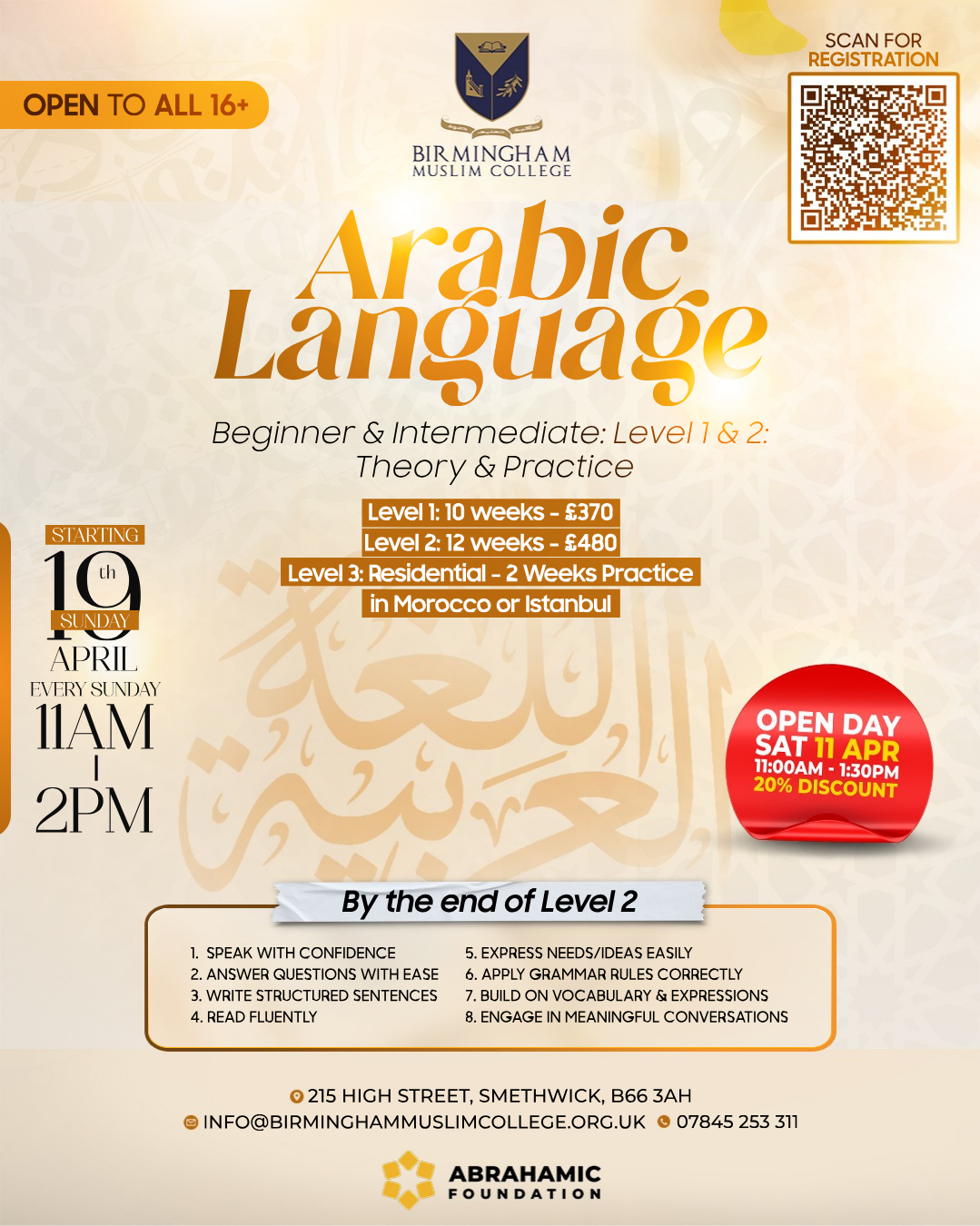
This series aims to facilitate the teaching of the Arabic language to non-native speakers, and to enable learners to become proficient. Basic Arabic language skills (listening, speaking, reading, and writing)
Level 1: Beginners – 10 Weeks
After completing this course students will be able to:
- Carry out the basics of their daily life, such as greeting, getting to know others, asking about family members, housing, and work, time, ordering food…etc.
- Read single and compound Arabic letters, with their names, short and long sounds, and their consonant and stressed states,
Level 1 Objectives
1. Developing basic Arabic language skills (initial use of the Arabic language) among learners.
2. Enabling students to become familiar with the Arabic language, its sounds, and structures.
Level 1 Topic Breakdown:
- Greetings
- Introductions (name, age, where you’re from, etc.)
- Family (members, numbers, descriptions)
- Housing (rooms, furniture, colours, location)
- Work and Study (professions, routines, classroom vocabulary)
- Meals and Food (types of food, meal times, preferences)
- Shopping (items, prices, colours, asking for things)
- Daily Life (daily routine, times, habits, activities)
- In the Classroom (objects, commands, instructions, positions)
- Vacations and Travelling (transport, destinations, schedules)
Level 2: Intermediate – 12 Weeks
After completing this level, students will be able to:
1- Rely on themselves to listen and talk to others.
2- To easily express what they want, and answer questions directed to them
3- To read fluently and write skilfully based on the words and dialogues he encountered.
4- Use the vocabulary and structures that were previously learned.
5- Application of the linguistic & grammatical rules correctly
Course Breakdown
Students must be able to read Arabic script
Starting
Sunday 28 September 2025 – 10 weeks (breaks for school holidays)
Sundays 11:00am – 14:00
Components of Level One (A):
Comprises of three units
Unit 1:
– Listening and speaking skills: (greeting and getting to know each other).
– Reading and writing skills: (Arabic letters, single and combined).
Unit 2:
– Listening and speaking skills: (Family – Housing).
– Reading and writing skills: (short sounds of the third vowels).
Unit 3:
– Listening and speaking skills: (work – meals).
– Reading and writing skills: (letters of maddah and leen).
Components of Level 1 (B):
Comprises of three units:
Unit 1
– Listening and speaking skills: (Study of the Arabic language – Shopping).
– Reading and writing skills: (consonants – tanween).
Unit 2:
– Listening and speaking skills: (daily life).
– Reading and writing skills: (stressed letters)
Unit 3:
– Listening and speaking skills: (in the classroom – vacation and travel).
– Reading and writing skills: (general rules and regulations).
1. Greetings
2. Introductions (name, age, where you’re from, etc.)
3. Family (members, numbers, descriptions)
4. Housing (rooms, furniture, colours, location)
5. Work and Study (professions, routines, classroom vocabulary)
6. Meals and Food (types of food, meal times, preferences)
7. Shopping (items, prices, colours, asking for things)
8. Daily Life (daily routine, times, habits, activities)
9. In the Classroom (objects, commands, instructions, positions)
10. Vacations and Travelling (transport, destinations, schedules)